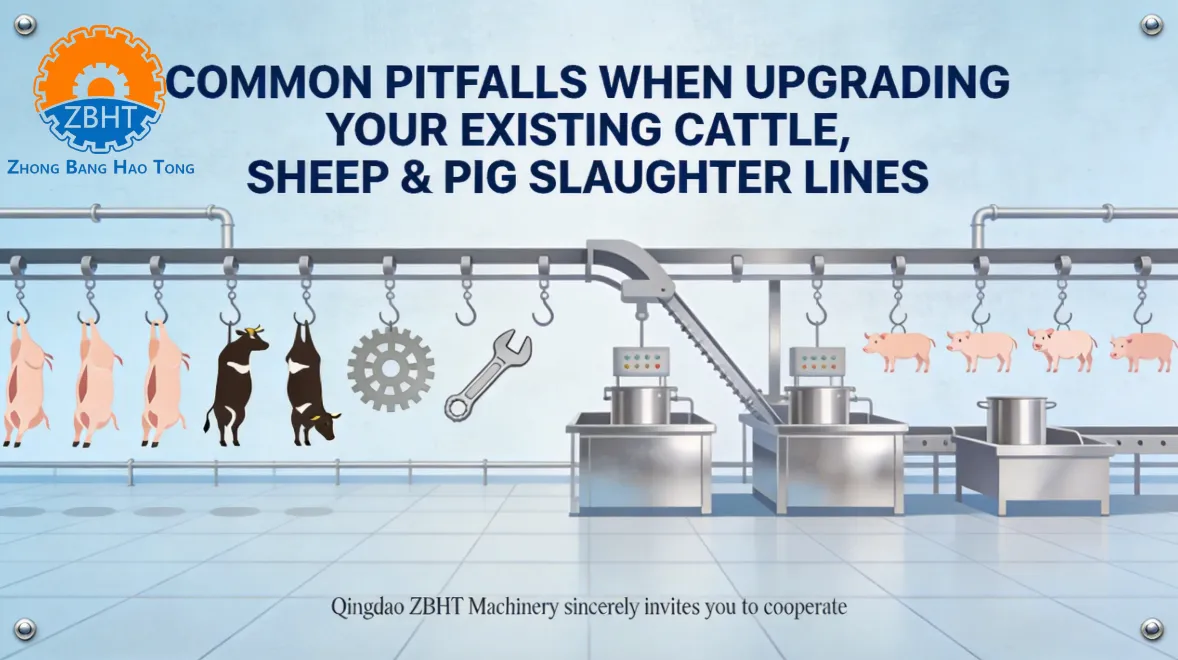
Upgrading livestock slaughter lines is a major investment designed to boost throughput, meet stricter food safety standards, and satisfy international export requirements. However, many abattoir operators encounter costly delays and operational bottlenecks by overlooking critical details before and during the retrofit. Below are the most frequent pitfalls and practical advice to avoid them.
1. Poor Compatibility with Original Infrastructure
One of the top mistakes is purchasing standalone new machinery without auditing your current line layout, floor load, drainage, power supply and waste treatment system. New cattle dehiders, sheep bleeding troughs or pig scalding tanks may not match the height, conveyor speed or footprint of your existing rail system. This leads to on-site rework, production downtime and extra construction expenses.
Tip: Conduct a full site survey first. Confirm conveyor synchronization, water supply capacity and wastewater discharge limits before selecting equipment.
2. Ignoring Local & International Regulatory Differences
Operators often focus only on CE or ISO hygiene certification for machines while neglecting regional meat import rules. Standards for animal welfare (stunning, bleeding time), cross-contamination separation, cold chain handover and traceability recording vary across target markets. A line upgrade compliant for domestic use may still fail EU, Halal or other third-party audits.
Tip: Align upgrade plans with your key export markets. Ensure equipment supports mandatory traceability and separation of clean/dirty zones.
3. Underestimating Hygiene & Cleanability Requirements
Many buyers prioritize production speed over sanitation design. Slaughter machinery with hidden crevices, hard-to-reach welds or non-food-grade materials creates bacterial harborage. Even 304 stainless steel equipment can become problematic if surface finishing is poor or disassembly for CIP (clean-in-place) is complicated. This increases cleaning labor and risks food safety non-conformities.
Tip: Choose machines with seamless welding, rounded corners, easy disassembly and validated washdown design.
4. Neglecting Animal Welfare Specifications
Improper upgrade of stunning equipment, restraining boxes or conveyor speed can breach animal welfare codes. Common issues include mismatched electric stunning parameters for different weight ranges of cattle, sheep and pigs, or excessive line speed leaving insufficient bleeding time. Non-compliance results in rejected meat shipments and loss of export access.
Tip: Test stunning and bleeding processes after installation. Adjust equipment parameters to fit your typical livestock size range.
5. Insufficient Staff Training & Operational Transition
Installing modern automated slaughter equipment means new operating, maintenance and sanitization procedures. A frequent pitfall is finishing hardware installation without training your on-site team. Operators may revert to old work habits, misuse sensors or skip routine maintenance, reducing equipment lifespan and creating safety hazards.
Tip: Include on-site operational & maintenance training in your upgrade contract. Prepare standard operating procedures (SOPs) before restarting production.
6. Inaccurate Throughput Calculation
Buyers sometimes oversize the new equipment to chase higher capacity without checking upstream/downstream limits. For example, upgrading the slaughter conveyor for 200 pigs per hour while keeping the old evisceration and chilling section unchanged creates bottlenecks. Conversely, under-sizing fails to deliver expected output gains.
Tip: Map the whole workflow. Balance the capacity of stunning, bleeding, evisceration, inspection and chilling stations.
7. Overlooking Maintenance & Spare Parts Supply
Focusing on upfront purchase cost and ignoring long-term service support is costly. Some suppliers offer low-price machinery but lack fast spare parts delivery and local after-sales service. When key components break down, the whole slaughter line may halt for weeks.
Tip: Confirm spare parts availability, warranty terms and overseas on-site service before signing the order.
8. Failure to Plan Downtime for Installation & Validation
Many slaughterhouses underestimate shutdown duration. Equipment delivery, assembly, testing, hygiene validation and official inspection all require scheduled downtime. Rushing the commissioning phase leads to untested lines going live, risking product contamination and audit failures.
Tip: Create a phased upgrade schedule. Carry out dry runs and hygiene validation before full commercial operation.
A successful slaughter line upgrade balances mechanical performance, regulatory compliance, hygiene and animal welfare. Working with Qingdao ZBHT Machinery, an experienced slaughter machinery manufacturer with CE & ISO certified products and global project references helps you avoid these common traps and secure stable export meat production.