At Qingdao Zhongbang Haotong Machinery, we have been designing and supplying custom rail systems for nearly 20 years. Our experience confirms: off-the-shelf rail systems cannot meet the real-world demands of modern meat processing.
In an industry where hygiene, efficiency, and regulatory compliance are absolutely essential, the right meat rail system is more than a convenience—it is a fundamental pillar of operational success.
Whether you operate a high-volume slaughterhouse or a retail butchery, your meat rail system must be specifically designed to fit your unique workflow. Any compromise invites inefficiency, contamination risks, and unnecessary downtime.
Why Your Meat Rail System Matters
A meat rail system is more than just overhead tracks – it's the central artery of your meat processing operation. It transports carcasses seamlessly through slaughter, dressing, chilling, cutting, and dispatch, while enabling safe handling, maintaining hygiene standards, and supporting production speed.
The key components that make it work:
Track: Hot-dip Galvanized or Stainless Steel Rail.
Rollers and hooks: Nylon-wheel, aluminum, hot-dip galvanized or stainless Steel , twin-track or tubular hooks.
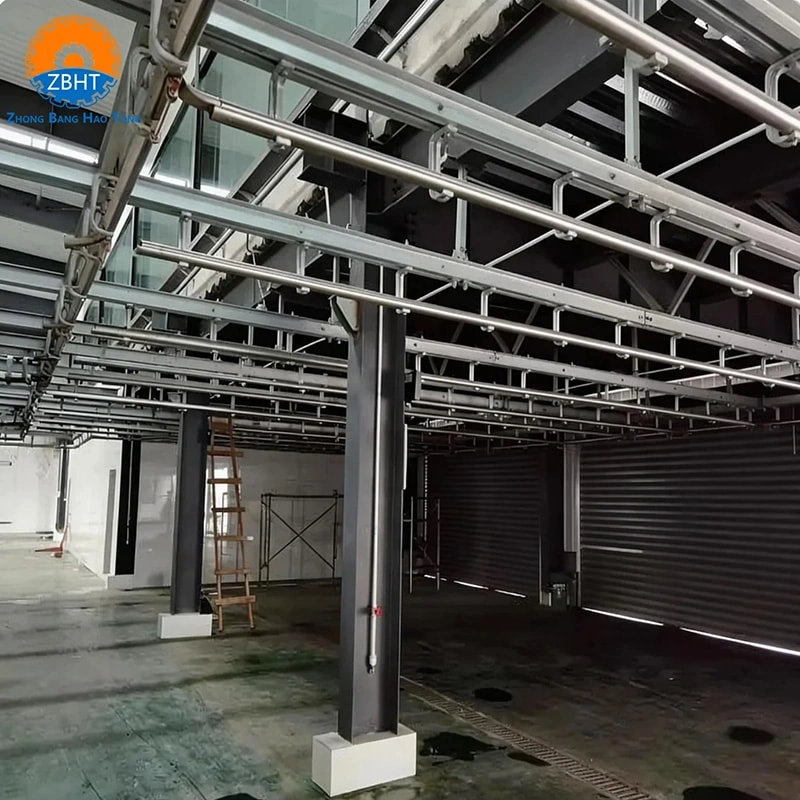
(pipe rail)
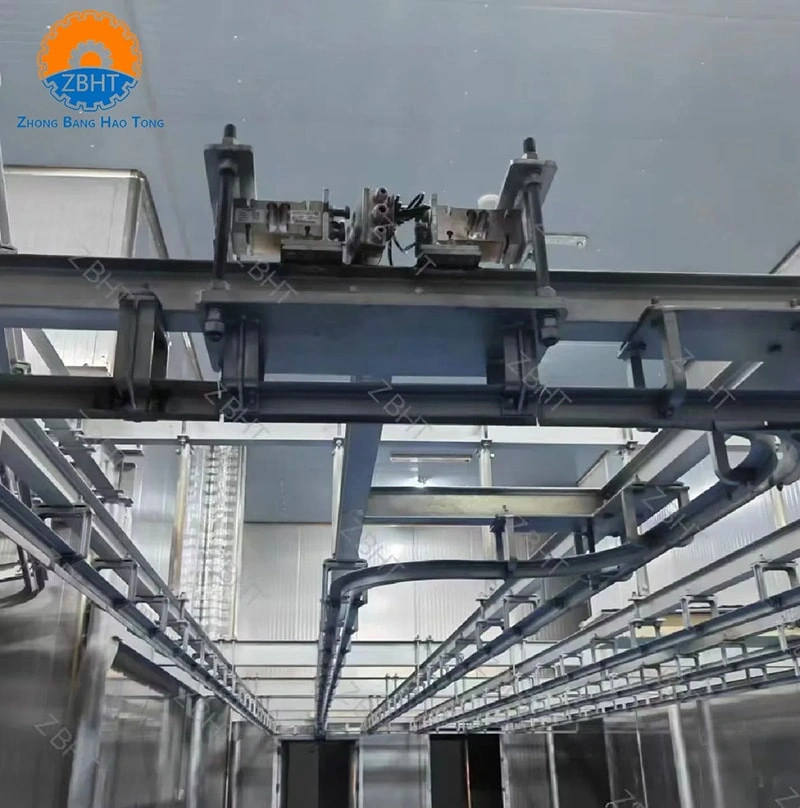
(double rail)
Switches and junctions: Guide carcass flow between work areas and chillers.
Mounting system: Custom support steel or cleats designed for your ceiling height and building – one of the most critical elements
Your meat rail system is the backbone of your layout. A poor design or installation will disrupt every step that follows.
Why a Standardized System Falls Short in Meat Plants
No two slaughterhouse are the same. A rail setup that works well in one slaughterhouse can cause major bottlenecks in another. Here’s why a custom approach matters:
Species matter – Cattle, pigs, and lambs each need different rail dimensions and hook styles.
Throughput and carcass size – Processing 10 sheep a week vs. 50 cattle a day changes everything: rail strength, line speed, and floor plan.
Building limits – Low ceilings, converted barns, or custom-built sites all require different overhead rail designs.
Workflow setups – Whether you use kill-to-chill routing, staggered dispatch, or multi-room movement affects rail layout.
Future growth – Designing with expansion in mind saves you from expensive retrofitting later.
Skipping these factors when designing your slaughterhouse rail system leads to slowdowns or costly do-overs.
What to Consider Before Designing a Meat Rail System
1. Load Capacity & Overhead Clearance
Support steel must be positioned above the rail and roller path—away from refrigeration units to maintain airflow.
Keep at least 300mm (12 inches) between the floor and the lowest point of the hanging carcass.
Run structural load calculations to handle peak carcass weight and full rail volume safely.
2. Hot-dip Galvanized vs. Stainless Steel Rail – Which One to Choose?
Stainless Steel Rail
strong corrosion resistance;
easy to clean;
High cost.
Hot-dip Galvanized
Lower upfront cost;
Still found in older systems;
Needs more frequent cleaning and maintenance.
Your choice depends on your budget, food safety requirements, and whether you're building fresh or retrofitting an existing plant.
3. Matching Hooks, Rollers & Switches
Make sure meat hooks and rollers are compatible with your rail profile.
Select hooks based on species and dressing method (e.g., gambrels for pigs, 18mm hooks for beef).
Switches must match the roller type—mismatched components cause jams and breakdowns.
4. Layout & Flow Efficiency
Map your actual kill-to-chill process before laying out the rail.
Aim for minimal manual handling and no backtracking.
Use switches, junctions, and gravity-fed sections to improve line speed and reduce labor.
5. Cleaning & Maintenance Access
Plan for regular washdowns from the start.
Avoid dead zones, overlaps, or tight spots where organic matter can build up.
Twin-track systems are much easier to clean than round bar rails.
6. Leave Room for Future Expansion
Install capped ends or pre-placed junctions if you plan to grow.
Choose a modular rail system so you can bolt on extra sections or transition lines later without major rework.
This version uses clear subheadings, plain English, and practical terms that meat plant operators actually search for when planning or upgrading overhead rail systems.