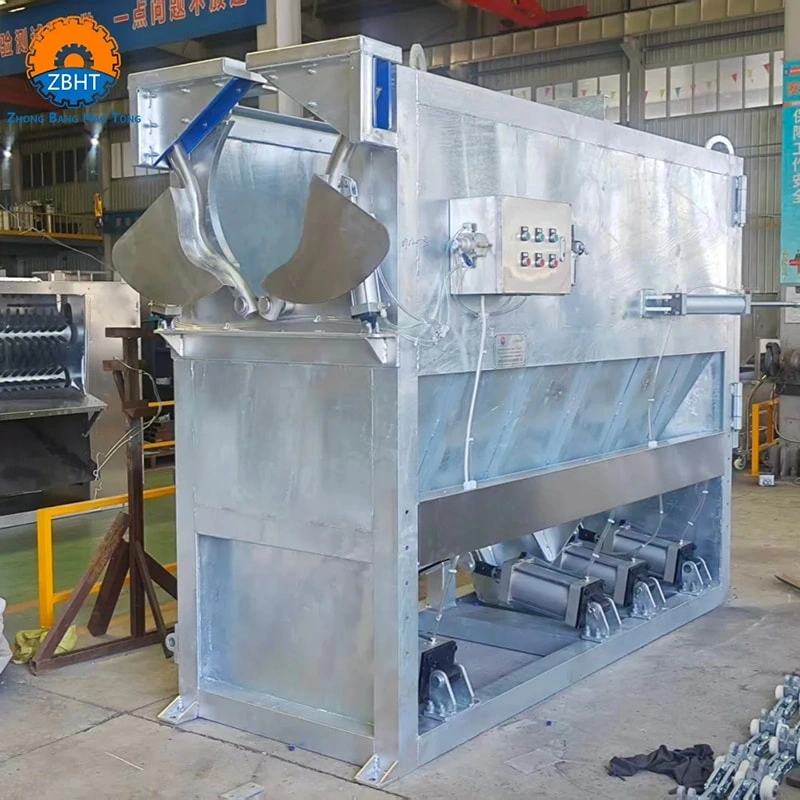
A cattle pneumatic restraining killing box with head clip — also known as a stunning box, pneumatic reverse killing box, or head fix type cattle kill box — is professional slaughterhouse equipment designed for the cattle slaughter industry. This cattle slaughter equipment is used to turn cattle over after electric stunning or captive bolt stunning, for cattle restraining, preparing for cattle live shackling, reversing and shackling after stunning, and then to hang the cattle by chaining the leg.
When used in conjunction with a cattle leading machine, this cattle slaughter equipment becomes more effective and significantly improves operator safety.
it is a statutory requirement to have a head restraint fitted into every cattle stun box. Active head restraints — such as the head-yoke and chin-lift system — physically restrain the animal to decrease the amount of head movement. This is critical because the target area on the head for effective stunning is relatively small; restricting head movements increases shooting accuracy, stunning effectiveness, and improves animal welfare.
The head clip device in a cattle pneumatic restraining killing box typically consists of a lower cylinder that lifts the cattle's lower jaw, while cylinders on both sides clamp the neck, ensuring effective stunning.
Cattle pneumatic restraining killing boxes with head clip generally come in two types: standard restraining boxes and those with a head clip device. The head clip type is primarily composed of the following components.
|
Component |
Function |
|
Head clip device |
Limits cattle head movement during stunning |
|
Box body |
Main frame housing the cattle |
|
Turning device |
Tilts the floor to slide cattle out |
|
Pneumatic control system |
Controls all cylinder operations |
|
Push gate |
Pushes cattle into position |
|
Side door |
Allows cattle to exit after stunning |
The head clip device is the key feature that distinguishes this cattle slaughter equipment from standard restraining boxes. It ensures that the animal's head is properly positioned and restrained during the stunning process.
The material selection for cattle slaughter equipment directly impacts durability, hygiene, and corrosion resistance. Here are the key material specifications for quality cattle pneumatic restraining killing boxes with head clip:
Most high-quality slaughterhouse equipment uses hot-dip galvanized steel for the main structure. Hot-dip galvanizing creates a thick, durable zinc coating that bonds metallurgically to the steel, providing superior protection against rust and corrosion in harsh slaughterhouse environments for up to 30 years.
Some cattle slaughter equipment manufacturers use stainless steel for components that require higher hygiene standards. Stainless steel ensures corrosion resistance and compliance with hygiene standards in abattoirs.
The pneumatic cylinders and control elements are typically made of aluminum alloy, offering lightweight properties and corrosion resistance.
Cattle pneumatic restraining killing boxes with head clip represent essential slaughterhouse equipment for modern cattle abattoirs. With their robust hot-dip galvanized construction, precision pneumatic control systems, and integrated head clip devices, these cattle slaughter equipment solutions deliver:
Humane and effective stunning
Enhanced operator safety
✓ High processing efficiency
✓ Long service life with corrosion-resistant materials
✓ Compliance with international animal welfare regulations
When selecting cattle slaughter equipment for your abattoir, choosing a cattle pneumatic restraining killing box with head clip ensures you meet both regulatory requirements and operational efficiency goals.