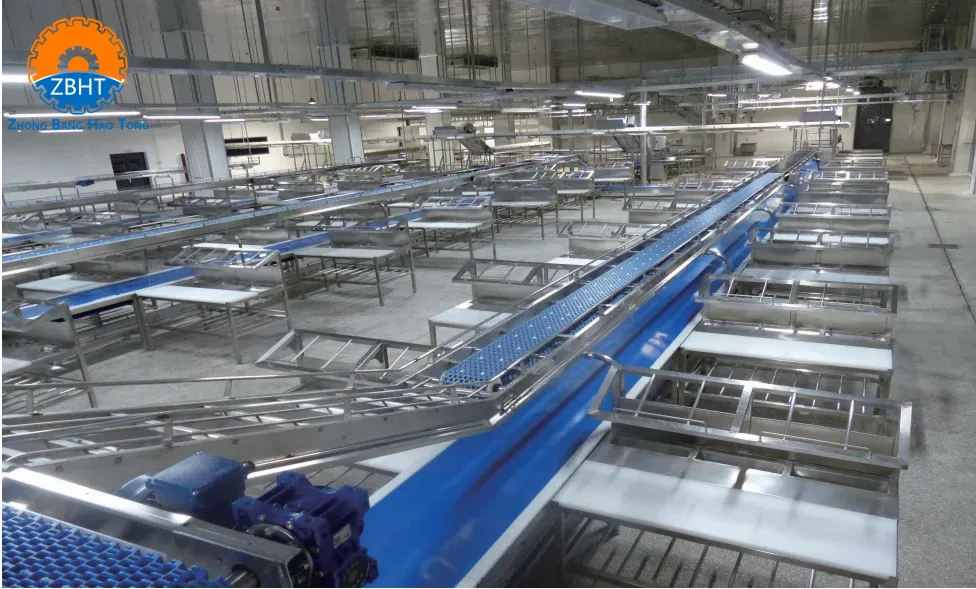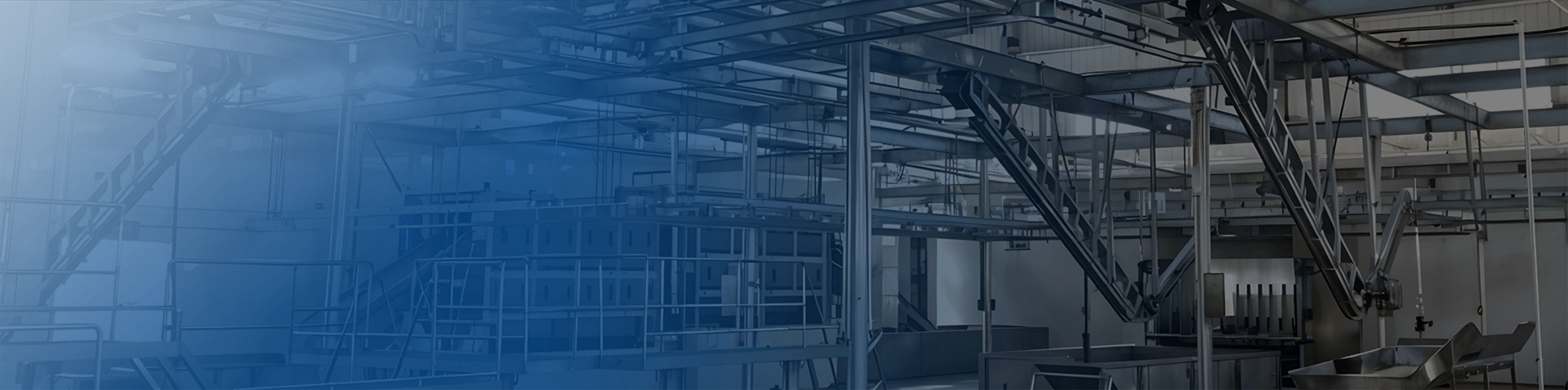
In meat cutting operations, conveyor equipment comes into direct contact with meat, blood, and fat. Hygiene control cannot rely on end-of-shift cleaning alone. The core is to design materials, structures, cleaning processes, and zoning according to food-grade standards, reduce dead corners, and prevent cross-contamination. Qingdao ZBHT Machinery Co., Ltd. specializes in pig, cattle and sheep slaughtering equipment and holds CE and ISO certifications. This article explains the common hygiene requirements for meat cutting conveyor equipment.
1. Materials and Surface Treatment: Food-Grade Materials Are the Foundation
For meat cutting conveyor equipment, conveyor belts, guards, and supports that directly contact meat should use 304 or 316L stainless steel, or food-grade PU, silicone, and similar materials, ensuring no harmful substances are released and no rust occurs. Contact surfaces should be smooth and, where required, polished to Ra ≤ 0.8 μm to avoid pits, cracks, and weld reinforcement that can retain meat residue and blood. Non-contact parts such as carbon steel frames and bolts should maintain at least 50 mm distance from food-contact surfaces, or be galvanized or coated with anti-corrosion treatment to prevent rust contamination.
2. No-Dead-Corner Structural Design: Making Cleaning Practical
The frame of meat cutting conveyor equipment should preferably use round tubes or open profiles, with rounded transitions at corners to avoid right angles and closed sections that trap dirt. The bottom can be designed with a drainage slope of no less than 15° and drain ports so that rinse water flows away smoothly. Welds should be ground smooth, and bearings and roller shaft ends should use sealed structures to prevent cleaning water and residue from entering. Bolts should not be exposed, or should be recessed and sealed with food-grade silicone. Conveyor belts, guards, and roller shaft ends should preferably use quick-release structures that can be removed without tools for deep cleaning, making daily cleaning truly practical.
3. Zoning and Process Control: Reducing Cross-Contamination
For areas using meat cutting conveyor equipment, separation of personnel and material flows should be emphasized. Layered or loop conveyor layouts can be used to separate clean baskets, raw materials, and finished products, and turnover containers should not be placed on the floor. Fresh raw material areas and cooked food packaging areas have different hygiene standards, so conveyor lines crossing these areas should include physical isolation to prevent cross-contamination from dripping juices or personnel movement. Turnover baskets should follow closed-loop management: after use, they are recovered, cleaned, sanitized, and reused to avoid secondary contamination from manual handling.
Daily Maintenance and Verification: Hygiene Control Must Be Verified
Before shifts, meat cutting conveyor equipment should be checked for belt tension, roller jamming, and proper operation of emergency stops. Any deviation or damage should be handled promptly to avoid dirt retention in damaged areas. The cleaning process should first remove surface residue, then wipe with detergent, rinse with clean water, sanitize, and dry. Each step should be fully implemented to prevent residual materials from deteriorating in gaps. After cleaning, test strips or visual inspection can be used to check residues, and verification should be included in daily procedures to ensure hygiene control is not merely formal.
5. How Does Meat Cutting Conveyor Equipment Match Pig, Cattle and Sheep Slaughtering Lines?
Qingdao ZBHT Machinery Co., Ltd. specializes in pig, cattle and sheep slaughtering equipment and holds CE and ISO certifications. Based on pig, cattle, and sheep slaughtering and cutting processes, we can provide matching suggestions for the material selection, structural design, cleaning method, and zoning layout of meat cutting conveyor equipment. The specific configuration should be determined according to product form, capacity, cleaning procedures, and the hygiene requirements of the target market. We can provide supporting documents related to CE and ISO certifications.