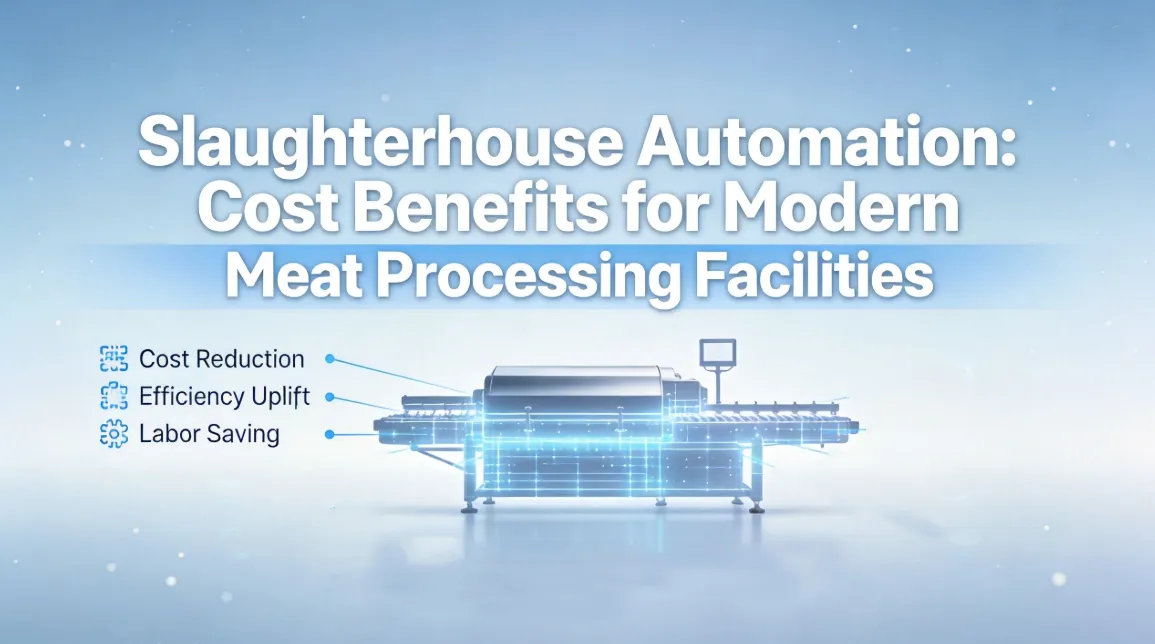
Modern meat processing plants are plagued by rising labor costs, staffing shortages, strict safety regulations and unstable production yields. Traditional manual slaughter operations are inefficient and costly, making automation a necessary, budget-friendly upgrade for modern facilities. Below are the core cost benefits of slaughterhouse automation.
Dramatic Labor Cost Savings
Labor dominates recurring slaughterhouse expenses. Tough, high-risk processing work leads to high turnover, frequent recruitment fees, worker compensation and continuous wage inflation, squeezing profits heavily. Automated robotic systems replace manpower for repetitive tasks including stunning, evisceration and precision trimming. This cuts annual labor costs by 30–40% and eliminates spending on training, shift management and temporary staffing. Uninterrupted automated operation also avoids productivity losses from staff fatigue and absence.
Higher Meat Yield & Better Margins
Manual trimming causes inevitable meat waste, as workers cannot adapt cutting methods to individual carcass differences in size, bone structure and fat distribution. Automated devices with scanning offer real-time, adaptive cutting adjustments for each carcass, lifting meat yield by 3–5%. This brings extra revenue without extra raw material input, while standardized products reduce defects and stabilize market pricing.
Improved Productivity & Reduced Downtime
Manual production is restricted by workers’ stamina and skills, resulting in low and unstable efficiency. Automated lines support continuous high-speed operation, boosting overall productivity by 15–25%. Intelligent automation avoids shutdowns caused by labor shortages and human errors. Built-in predictive maintenance identifies potential faults in advance, cutting unplanned downtime and lowering unit production costs.
Lower Long-Term Operational Costs
Professional automated equipment adopts food-grade durable materials, adapting well to humid, high-temperature workshop environments with long service life and low long-term maintenance costs. Reduced manual contact minimizes cross-contamination risks, avoiding safety violations, product recalls, fines and brand losses. Digital data tracking also optimizes energy use and production management to cut waste and administrative costs.
Easier Compliance & Lower Operational Risks
Tightening global food and workplace safety regulations bring high compliance risks for inconsistent manual operations, including fines, injuries and rising insurance costs. Automation realizes full-process standardization and traceability, simplifying audits and lowering compliance expenses. Less on-site manual work greatly reduces workplace accidents and unexpected financial losses.
Fast ROI & Enhanced Competitiveness
Though requiring initial investment, slaughterhouse automation delivers stable returns. Most factories recoup investment within 2–3 years via saved labor costs, higher yields and reduced operational risks, followed by continuous net profit growth. Automated plants provide standardized, high-quality and low-cost products, gaining obvious market advantages over high-cost, unstable traditional manual processing facilities.
Conclusion
Slaughterhouse automation is an essential cost-reduction and efficiency-enhancing solution for modern meat processing facilities. It effectively cuts labor waste, improves product yield, boosts productivity and mitigates operational risks. With rising industry costs and stricter quality standards, automation has become an industry trend, helping meat processors stabilize profits and maintain long-term market competitiveness.
Check out our selection of automatic equipment at Qingdao ZBHT Machinery today.