Large‑scale fixed slaughterhouses deliver high throughput for centralized meat markets, yet many remote livestock‑raising areas across Africa, Southeast Asia, and parts of Latin America face long‑standing processing bottlenecks. Vast distances to permanent abattoirs, expensive live‑animal transportation, limited local infrastructure, and high animal‑stress risks have long restrained rural meat supply chains. Against this backdrop, mobile slaughter units are rapidly emerging as a practical, cost‑effective solution for scattered farms, pastoral communities and agricultural cooperatives in hard‑to‑reach livestock production zones.
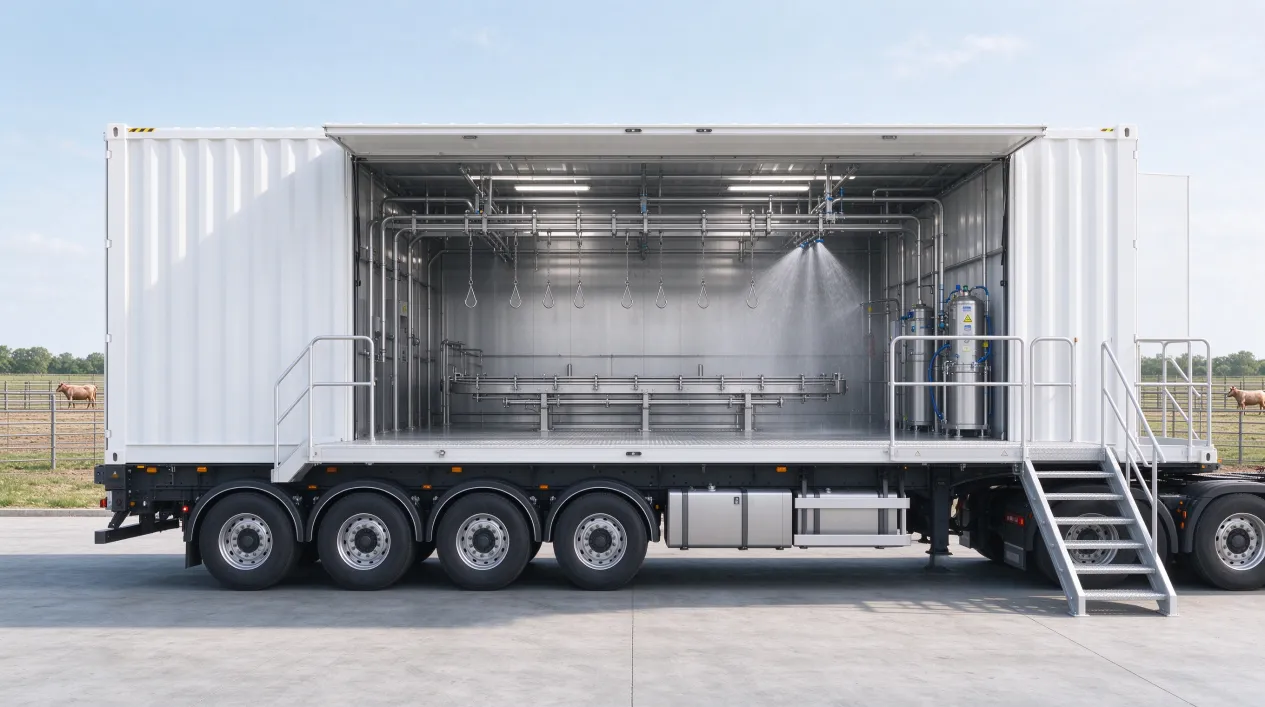
Mobile slaughter units are self‑contained, transportable processing systems built inside trailers or standard shipping containers. Integrating stunning, bleeding, dressing, evisceration, sanitation and built‑in chilling modules, these complete units can be towed or trucked directly to farm sites instead of moving live livestock over hundreds of kilometers. Well‑engineered mobile slaughter systems adopt food‑grade 304 stainless steel structures, separate clean‑dirty working zones, and in‑place cleaning functions to satisfy international hygiene requirements including HACCP, CE and ISO standards. Customized configurations for halal slaughter are also available to satisfy religious‑compliant processing requirements for global buyers.
For remote livestock operators, the practical advantages are obvious. First and foremost is improved animal welfare. Eliminating long‑distance live transport cuts transportation‑related stress, injury and mortality, which in turn stabilizes final meat quality and tenderness. Second, producers substantially reduce logistics expenditure for livestock hauling. Small‑scale farmers and pastoral groups who cannot afford to construct a stationary abattoir gain access to standardized inspected processing via shared or individually owned mobile units. Local communities retain carcass and by‑product value locally and build shorter farm‑to‑consumer meat supply chains. Third, deployment flexibility stands out: no heavy civil construction or permanent plant buildings are required. Units can rotate among multiple farms seasonally to match livestock slaughter cycles, perfectly fitting extensive grazing‑based livestock production in remote territories.
Market data reflects this rising global adoption. The worldwide mobile slaughter equipment market maintains stable growth, with accelerating orders coming from rural regions lacking adequate meat‑processing infrastructure. Buyers include agricultural cooperatives, private meat entrepreneurs, government rural‑development projects and investors targeting local premium meat markets. Compared with building traditional abattoirs which require huge capital investment and lengthy construction cycles, mobile slaughter solutions shorten project cycles and lower entry thresholds for remote‑area meat‑processing businesses.
Even so, site operators need to evaluate several practical factors before investment. Local regulatory approval for mobile processing operations, stable water‑power supply at working locations, routine equipment maintenance, and proper waste disposal management remain essential points for smooth daily operation. Selecting experienced manufacturers is critical, as reliable units must balance compact layout, stable running performance, easy transportation and full compliance with food‑safety norms.
With over 17‑year experience manufacturing complete slaughter‑processing machinery and exporting solutions to more than 50 countries, our team delivers tailor‑made mobile slaughter units for cattle, sheep, goats and pigs. Our container‑style and trailer‑mounted mobile slaughter lines support capacity customization for small‑to‑medium throughput, with full‑set CE & ISO certification, halal‑adaptable designs, on‑site installation guidance and after‑sales technical support. Whether you run scattered pastoral farms, rural cooperative projects or remote‑region meat‑processing startups, we provide one‑stop mobile slaughter system solutions matching local conditions.
As global food‑supply chains focus more on localization, animal welfare and cost‑efficient rural infrastructure, mobile slaughter technology will continue expanding its footprint in remote livestock‑producing territories. It offers a feasible path to unlock the production potential of vast rural livestock resources while delivering safe, high‑quality meat products for local communities and export markets.
If you would like to explore technical parameters, case references or customized solution details of our mobile slaughter units, feel free to contact our engineering team for further consultation.