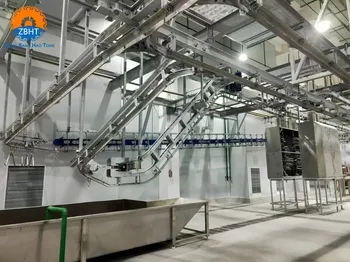
Daily Maintenance of the Suspension Conveyor System
Chain and Track: The suspension conveyor chains are in constant contact with water, oil, and steam, and the rate of corrosion and wear is much higher than that of ordinary industrial chains. Regular inspections should be conducted to check the wear condition and lubrication status of the chains. The slaughtering equipment comes into direct or indirect contact with meat products, and the lubrication must use food-grade lubricants. The reducer should also be regularly refilled and replaced with lubricating oil, and the reducer used in the cooling room should select lubricating oil that meets low-temperature requirements.
Hooks and Trays: The hooks and trays used on the suspension conveyor for hanging carcasses or holding internal organs should be made of stainless steel or other non-toxic, easy-to-clean materials. They must not have sharp corners, sharp edges, or burrs to avoid scratching the internal organs and causing contamination. After slaughtering, the hooks and trays must be thoroughly cleaned and a dedicated cleaning and disinfection device should be set up at the appropriate position. They should be treated with water at 82°C or disinfectants.
Safety Protection Devices: The drive device of the suspension conveyor system should have overload protection functions and load-starting capabilities - when an overload occurs, it can automatically stop to prevent the motor from burning out or the chain from breaking. At the same time, automatic shutdown, alarm devices, and emergency handling devices should be installed at the easily faulty parts of the conveyor line, such as the unloading device, to ensure a quick response in abnormal situations. These safety devices should be tested regularly to ensure their functions are normal.
Maintenance of core equipment for slaughtering and processing
The electro-stunning equipment and bleeding line are the initial components of the slaughtering line. The electro-stunning equipment involves high-voltage circuits, and the daily inspection focuses on whether the insulation layer is aged or damaged, whether the electrodes are in good contact, and whether the emergency stop device is sensitive. The transmission chain and hooks of the bleeding line also require regular lubrication and inspection for stability to prevent the hooks from falling and injuring people. Some highly automated slaughtering lines have adopted a carbon dioxide stunning system, and additional checks are required for the gas pipeline sealing and gas concentration monitoring devices.
The hair-removing and trimming equipment is a key device specific to pig slaughtering lines. The temperature of the hair-removing tank is usually maintained at around 60℃, and the hot water in the tank mixes with pig hair, which has a strong corrosive effect on the equipment. Daily maintenance should focus on checking whether the heating device is working properly, whether the temperature sensor is accurate, and whether there is any leakage in the tank. The rubber scraper or trimming rods inside the trimming machine are wear-prone parts, and regular checks for wear and timely replacements are necessary to avoid affecting the hair-removal effect.
The splitting equipment (splitting saw or splitting robot) has extremely high precision and safety requirements. Traditional handheld splitting saws need daily checks on the tension and sharpness of the saw blade, and thorough cleaning and oiling for rust prevention after use. Automated splitting robots involve hydraulic systems, pneumatic systems, and visual recognition systems, and regular checks are required for the hydraulic oil level and quality, whether the air pipes are leaking, and whether the sensor lenses are clean. According to equipment specifications, high-speed rotating equipment such as splitting machines must be equipped with protective covers, and the protective covers should be designed for quick disassembly to facilitate quick opening during maintenance.
Maintenance and Management of the Cold Chain System
The carcasses after slaughtering need to be stored and cooled at a temperature range of 0 to 4℃. If the cold chain system fails, the quality of the meat will suffer irreversible damage. Therefore, the maintenance of the cold storage and refrigeration equipment directly relates to product safety and business operating efficiency.
Daily inspections of refrigeration equipment include: regular leak detection to ensure no refrigerant leakage; checking the operating status of the compressor, condenser, and evaporator; observing whether the refrigeration effect meets the required temperature. Cooling conveying equipment (the suspended conveying line in the acid removal room) must meet the requirement of reliable operation under temperature changes ranging from -20℃ to 40℃ - the temperature difference between the warehouse before and after the carcasses are stored can be over 30℃, which poses high requirements for the adaptability of the conveying equipment motor and control system.
Cold storage safety is also an important maintenance content. The cold storage door should be equipped with an internal emergency opening device to prevent people from being mistakenly locked inside. In addition, lubricating oil and electrical components used in the cold storage should also be adapted to the low-temperature environment.