Selecting the appropriate industrial tray washing system significantly impacts sanitation standards, workforce productivity, water consumption, and overall operational continuity. Regardless of whether the items being cleaned are trays, crates, Euro containers, or alternative reusable carriers, the optimal solution must align with your slaughterhouse/lab/factory specific soil load, processing volume, and facility footprint.
This guide provides a comprehensive overview of industrial tray washer functionality, outlines the key pre-purchase considerations, and offers a comparative analysis of compact, mid-range, and high-capacity models designed for food production settings.
At Qingdao Zhongbang Haotong Machinery,we can provide you with the most suitable solution suggestions based on your specific needs. All products are implemented in accordance with the requirements of the ISO9001:2008 quality system. Product quality meets national requirements and EU standards.
Understanding the Industrial Tray Washer
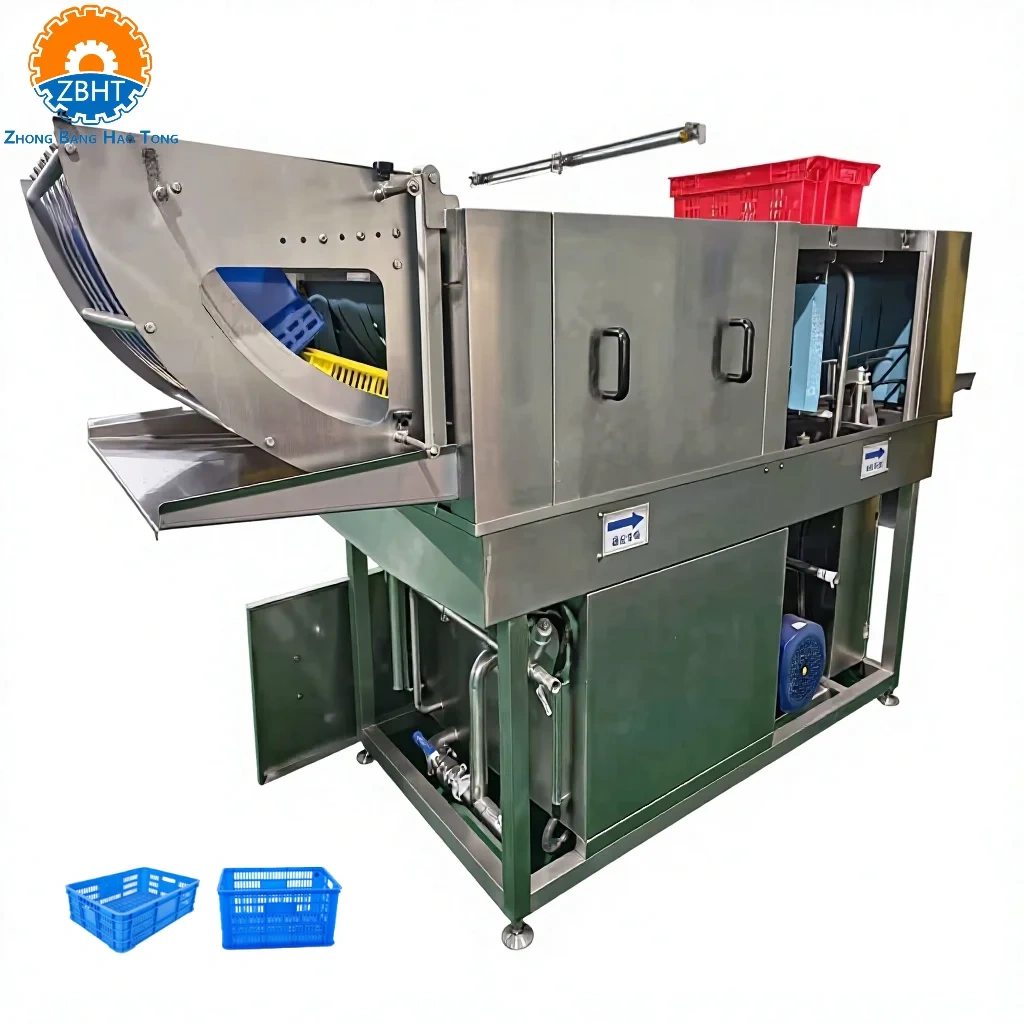
An industrial tray washer is an automated cleaning appliance specifically engineered for sanitizing trays and other returnable containers utilized throughout food processing and handling operations. Depending on operational requirements, these systems are also capable of accommodating crates, boxes, totes, and Euro containers—wherever consistent hygiene benchmarks and dependable washing outcomes are essential.
In practice, a tray washing system contributes to:
Hygiene uniformity-delivering repeatable, reliable sanitization results.
Labour reduction-minimizing the need for time-consuming hand washing.
Food safety compliance-strengthening adherence to regulatory and quality standards.
Faster container turnover-getting clean trays back into circulation more quickly.
Smoother production flow-reducing delays and congestion along the line.
Why Tray Washers Are Essential
Better Hygiene, Every Time:Trays travel across multiple areas of your site. A well-chosen washer removes dirt and bacteria more reliably than hand washing alone ever could.
Faster Turnaround, Smoother Flow:Automated cleaning gets trays back into the line quicker—especially vital when you're handling high volumes and every minute of downtime counts.
Less Labour, Lower Utility Bills:The right machine cuts manual handling and keeps water, energy, and chemical usage in check, all while delivering the consistent results you need.
What to Think About Before You Buy
The right machine isn't just the biggest one you can find. It needs to fit what you're washing, how soiled it is, how many items you need to process each hour, and how it works within your current space.
Type of Dirt:Proteins, grease, blood, glue, and baked-on residue all behave differently in the wash. That affects cycle time, temperature, detergents, and the level of scrubbing force required.
Items Per Hour:Focus on how many trays or containers you need to clean during your busiest periods. That's usually more important than your average daily total.
Tray Dimensions:Width, height, and the style of container all matter. The washer must be designed to handle what you actually use day in, day out.
Integration with Your Process:Think about loading, unloading, single-person operation, conveyor hookups, staff availability, and how clean trays will make their way back to the line.
What to Check Before Installation
1.Space and Access
Make sure you can actually get the machine through the door.
Leave enough room around it for cleaning and maintenance.
Check that the floor can take the weight.
Ensure trays can flow in and out smoothly.
2.Power, Water, and More
Confirm power supply is available and compatible.
Check water supply is adequate.
Verify drainage is positioned where you need it.
Arrange wash water heating if required.
Allow space for cleaning access.
Install vapour extraction if steam is likely to be an issue.
Making the Right Choice
The best tray washer isn't the biggest one—it's the one that fits your trays, dirt levels, processing speed, and floor space. Get the spec right, and you'll see better hygiene, smoother operations, and a machine that feels like a natural part of your process, not an afterthought.
If you're comparing models right now, start with what you need to wash, your available space, and your peak-hour throughput. Then use those factors to narrow down the size and features that make sense for your site.